
By Jeff Weeks, CFP® | The Accountable Update
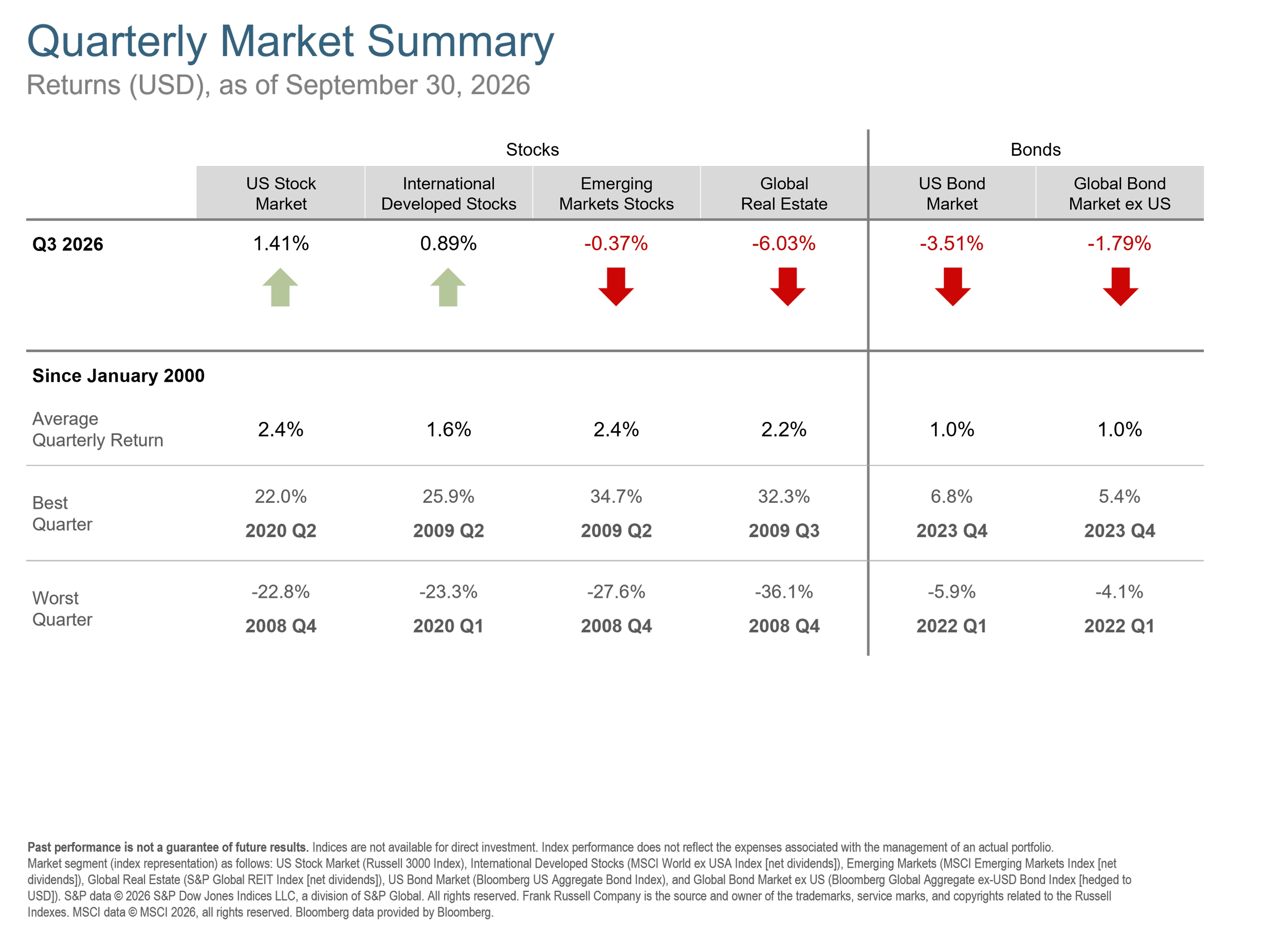
Source: Dimensional Quarterly Market Review, Third Quarter 2026. Returns in US dollars through September 30, 2026; MSCI returns reflect net dividends. These are index returns, not ATX portfolio results. Indexes cannot be purchased directly, and returns exclude portfolio management expenses. Past performance does not predict future results.
The third quarter offered a useful reminder that a positive stock market headline can leave out quite a bit. Broad US stocks finished modestly higher, but small companies struggled and bonds lost ground as interest rates rose. Depending on what you owned, the quarter could have felt very different from the headline. I think that difference deserves more attention than a prediction about where the market goes next.
As November’s midterm elections approach, there will be plenty of those predictions. Some will come with charts, some with strong political convictions, and some with a confident explanation of why this election changes everything. My approach is to ask what the information means for the financial plan and whether it provides a sound reason to change the portfolio.
The quarter in perspective
The Russell 3000 Index, a broad measure of US stocks, gained 1.41% during the quarter. Developed international stocks rose 0.89%, while emerging markets slipped 0.37%. Those modest quarterly results came after stronger gains earlier in the year. Emerging markets still led these three benchmarks for the first nine months, with a 23.38% return.
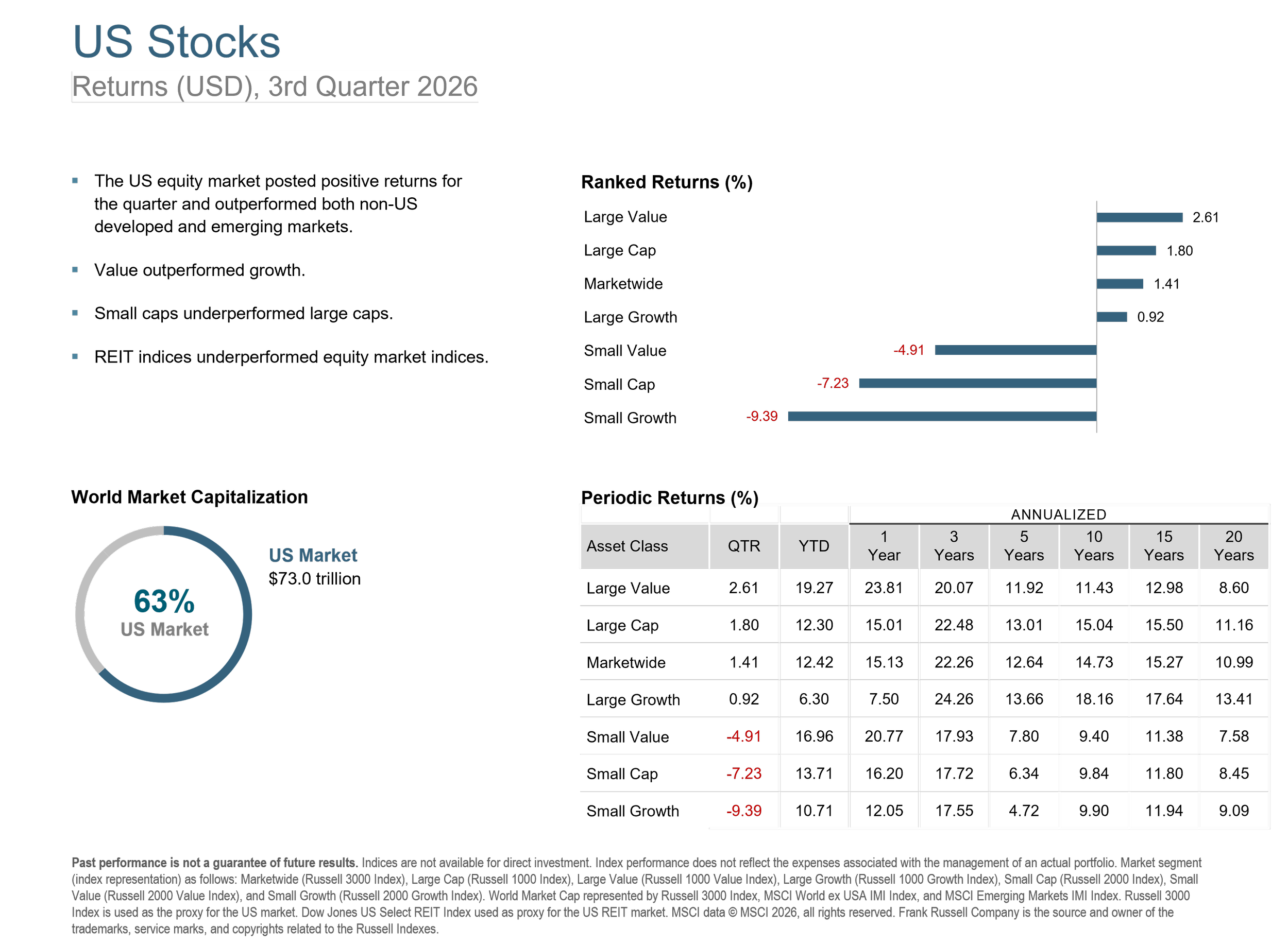
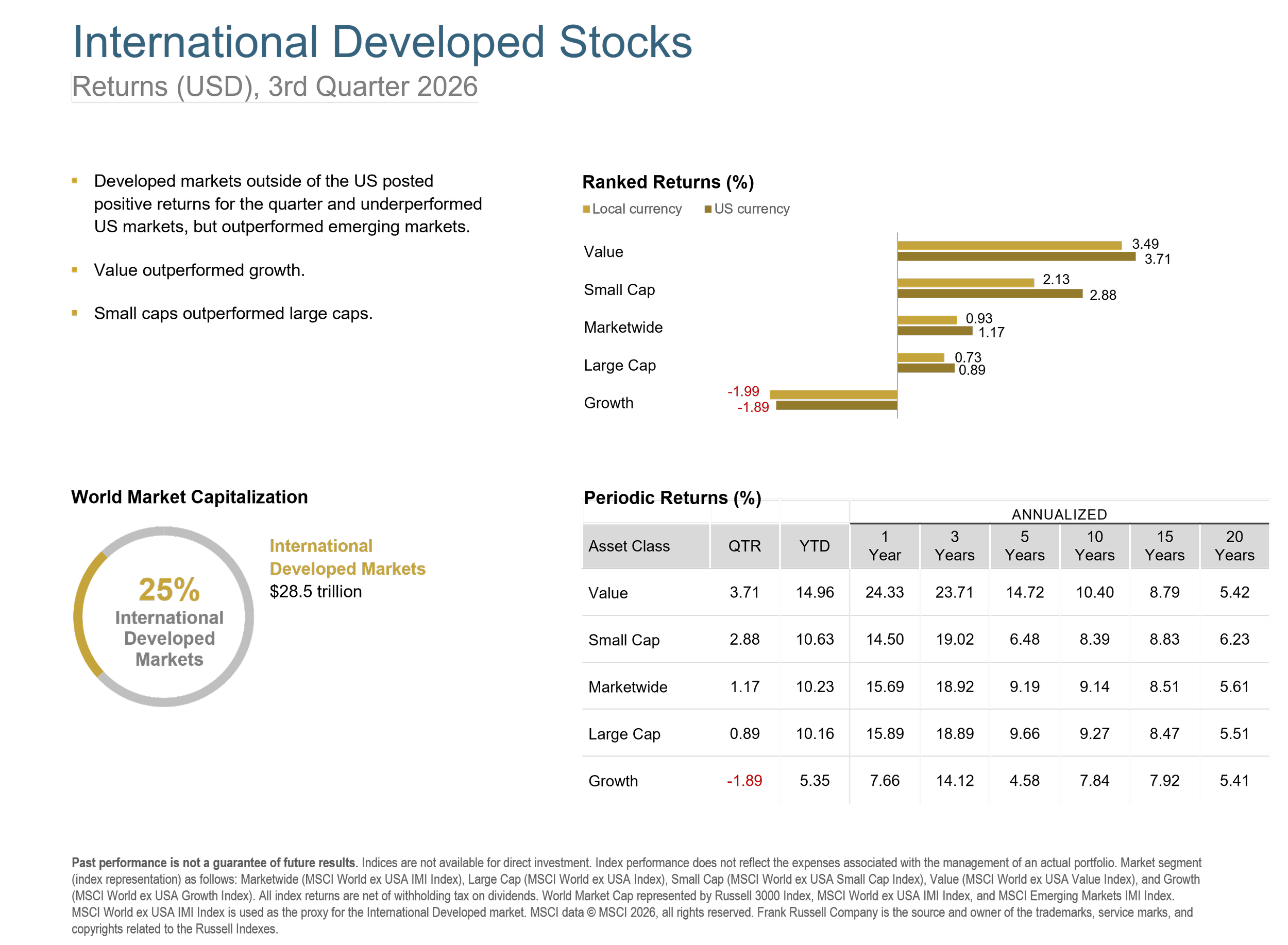
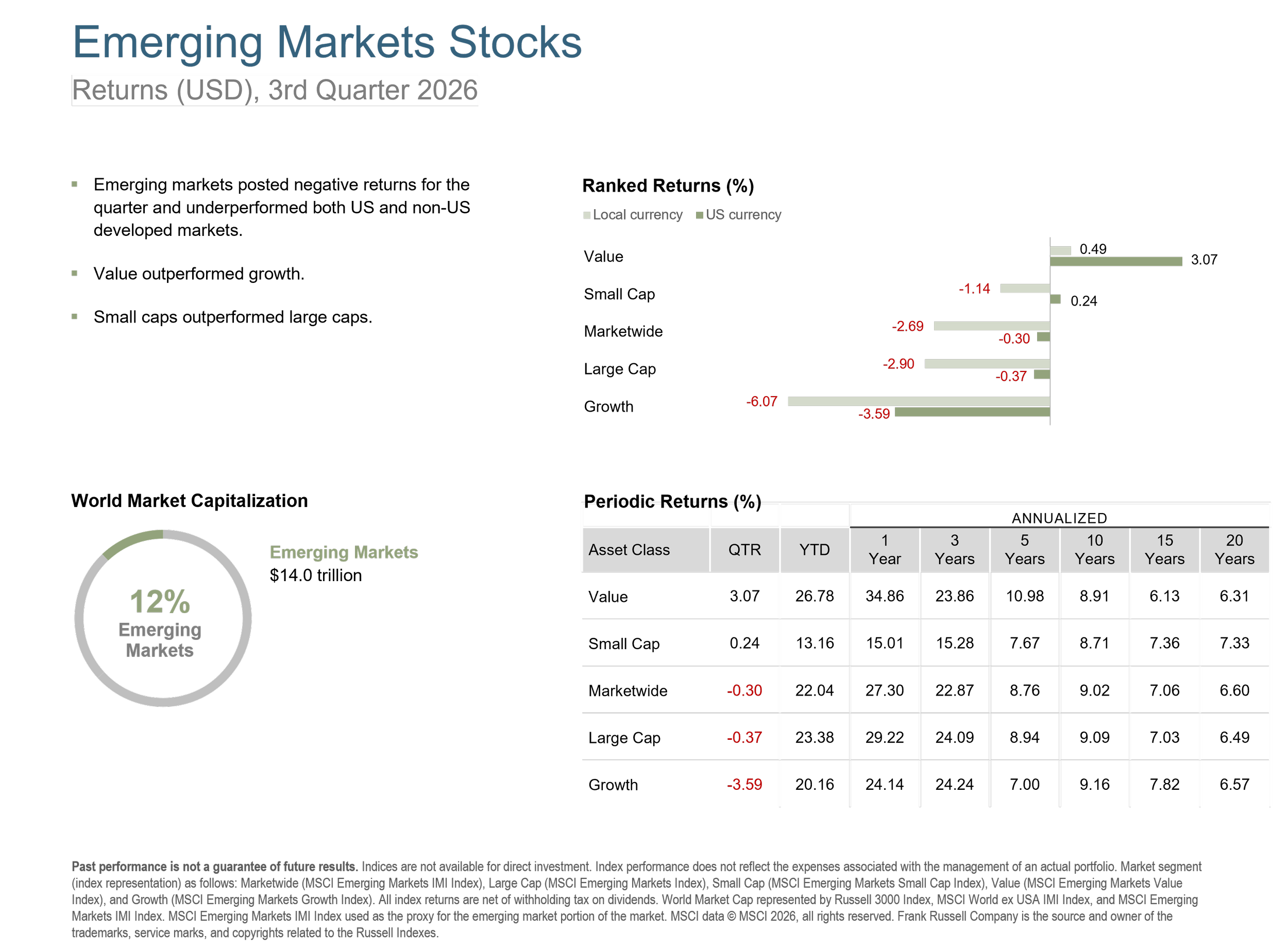
The small company results illustrate why the time period matters. The Russell 2000 lost 7.23% in the quarter but remained up 13.71% for the year. Value stocks also outperformed growth stocks across the US, developed international markets, and emerging markets during Q3. I would be careful about turning any of those observations into a forecast for Q4.
For a diversified investor, different results across markets are part of the experience. A portfolio that holds international stocks, smaller companies, value stocks, and bonds will sometimes trail the index receiving the most attention. I favor broad diversification and measured exposure to size, value, and profitability because of the evidence over extended periods. That approach requires accepting periods when some pieces disappoint, and it does not eliminate the possibility of losses.
Higher yields came with a price
The more consequential development for many investors was the rise in interest rates. On September 16, the Federal Reserve raised its policy rate by a quarter percentage point to a range of 3.75% to 4.00%. By September 30, the 10 year Treasury yield stood at 5.29%. The broad US bond benchmark declined 3.51% during the quarter, while the municipal bond benchmark fell 6.35%.
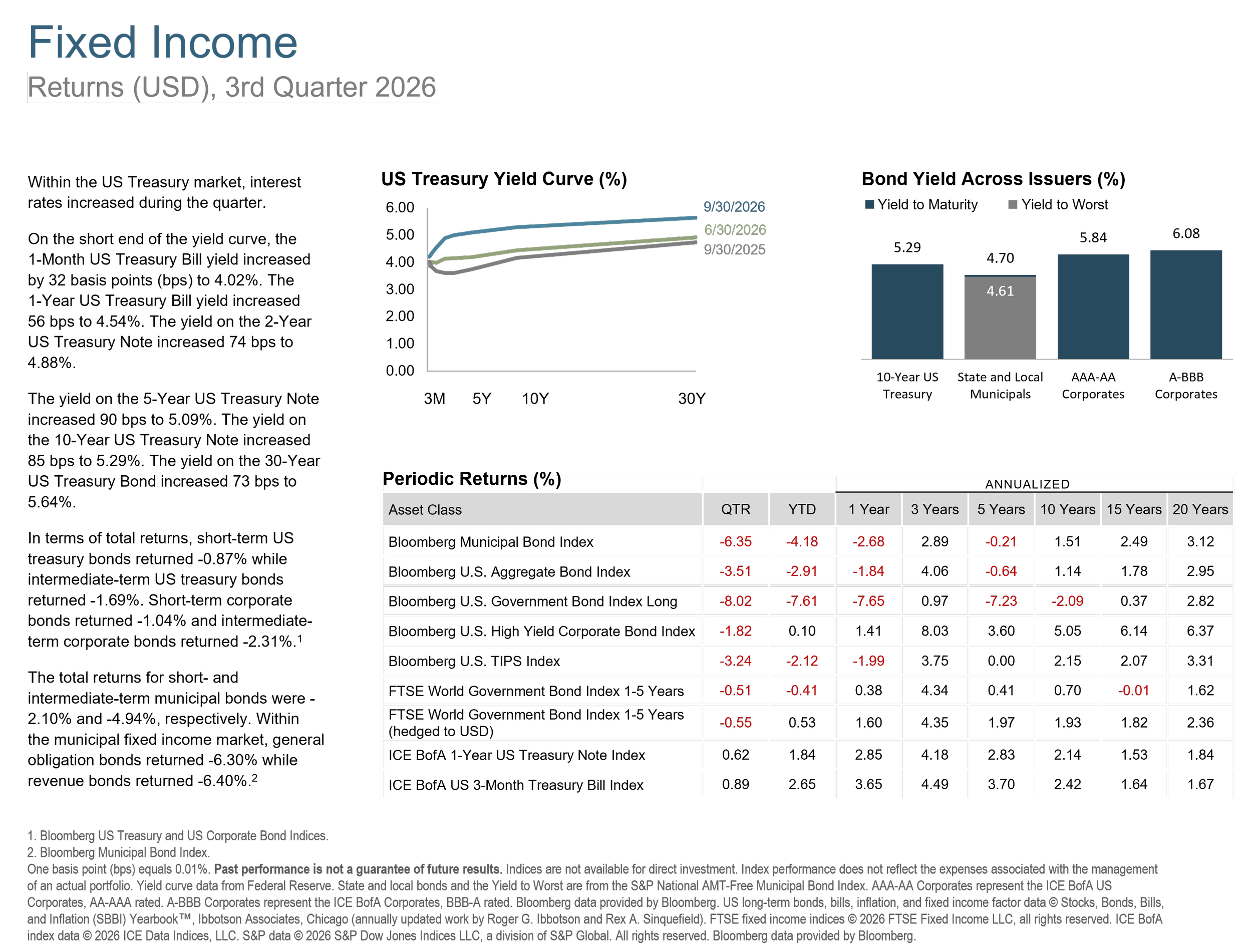
The mechanics are straightforward. When newly issued bonds offer higher yields, an existing bond with a lower fixed coupon generally becomes less valuable. Bonds with longer durations tend to be more sensitive to those changes. Strong credit quality can reduce concern about repayment while still leaving meaningful exposure to interest rate movements.
For someone approaching retirement, higher yields can improve the choices available for funding future spending. They also make it tempting to move money out of stocks after a difficult quarter elsewhere in the portfolio. I would evaluate that decision against the income plan, taxes, inflation, and the need for growth over a potentially long retirement. The current yield is useful information, but it cannot answer the entire allocation question.
An election is not an investment instruction
Politics matters. Tax policy, regulation, trade, and government spending can affect businesses and household finances. Markets respond to changes in expectations about those policies, sometimes quickly. The difficult leap is turning a political opinion into a reliable prediction about investment returns.
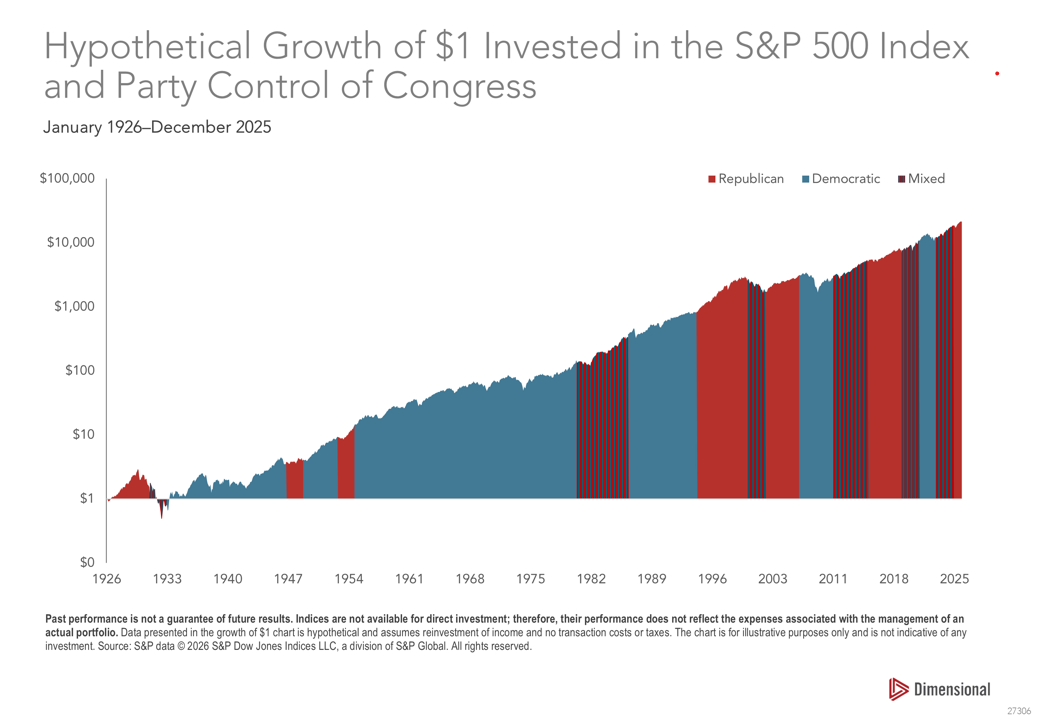
Getting the election result right is only the beginning. An investor would also need to anticipate which policies actually become law, how businesses respond, and how the outcome differs from what prices already reflect. Earnings, interest rates, competition, and developments overseas continue to matter throughout that process. That is a lot to get right before deciding to sell a diversified portfolio.
Companies continue trying to attract customers, manage costs, and earn profits regardless of which party controls Congress. Some adapt successfully, and others struggle. Owning a broad collection of businesses provides exposure to that ongoing effort without requiring us to identify every political winner in advance.
Historical election statistics deserve similar restraint. A century of market history contains only about 25 midterm elections, with many other developments affecting each year’s returns. An average from that sample can provide perspective, but I would not use it to promise a rally or predict a decline.
Actual policy changes can call for planning adjustments. A change in tax law may affect the timing of income, charitable gifts, or retirement account withdrawals. I would review those details when the rules are clear. Moving to cash because a preferred candidate might lose is a very different decision, especially when there is no clear plan for getting back into the market.
What I would review before year end
As an Austin financial planner, I would use this quarter as a reason to check whether upcoming spending is supported by appropriate cash reserves and bond maturities. I would also review whether market movements have pushed the allocation away from its intended targets, and whether rebalancing makes sense after considering taxes and trading costs. In taxable accounts, losses may create opportunities to offset gains, subject to the applicable tax rules. For retirees, updated spending and income assumptions matter more than the latest election forecast.
The useful question heading into Q4 is whether the portfolio still fits the life it is supposed to support. An election result cannot determine your time horizon, cash needs, or ability to tolerate losses. If higher rates, recent returns, or election concerns have you reconsidering your approach, get in touch through the ATX Portfolio Advisors contact page. I can help you review those concerns in the context of your financial plan.
For educational purposes. Investment decisions and tax strategies should reflect individual circumstances. Diversification does not assure a profit or prevent a loss.