
Accountable Update

Investing In The Jimmy's and Joe's

Photo by Kalawin/iStock / Getty Images

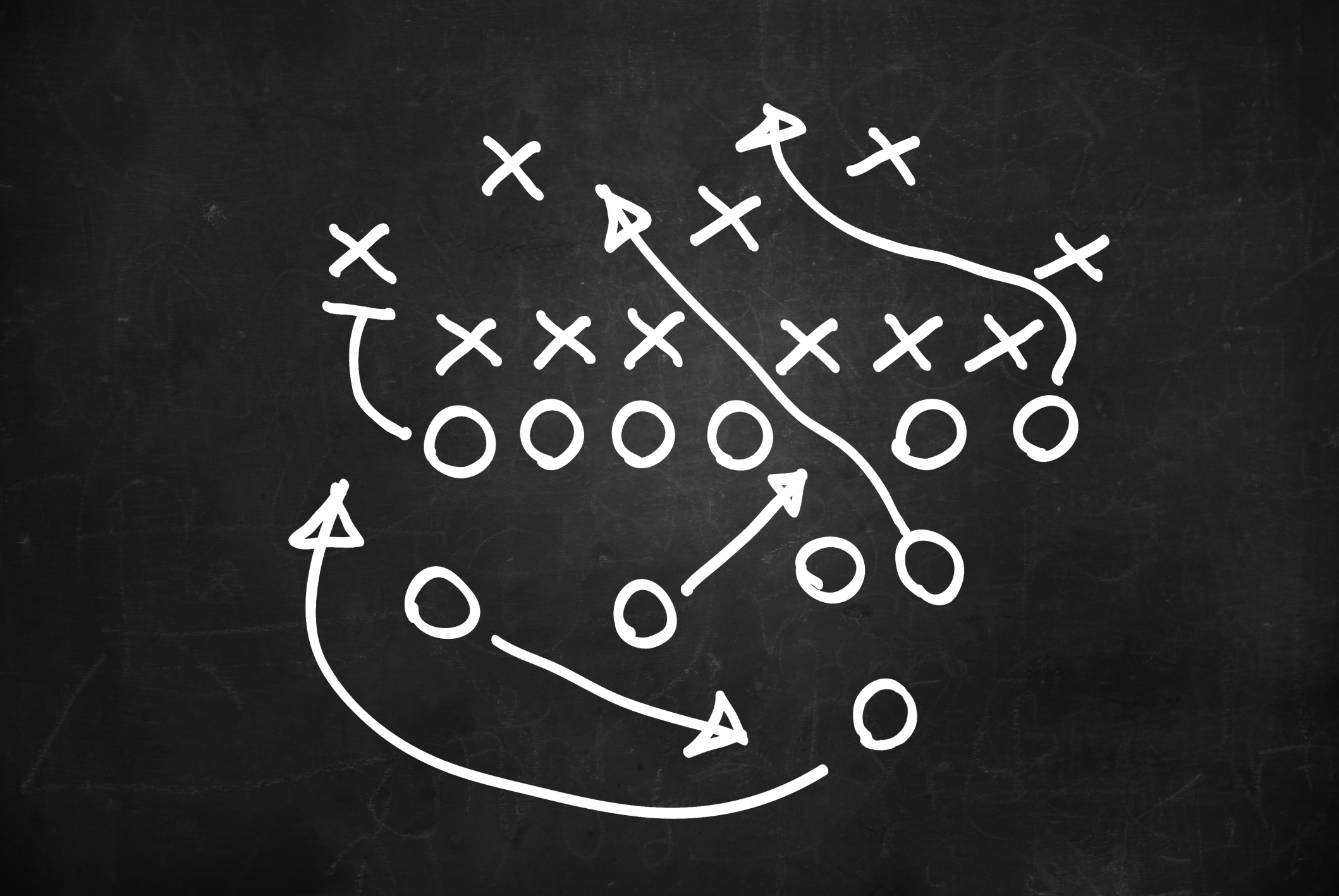
There is an old saying about coaching football, “It ain’t so much about the X’s and O’s. It’s about the Jimmy’s and the Joe’s.” Coaches at all levels measure player attributes such as size, speed, agility, and strength, because they know that the bigger, faster, quicker, and stronger their teams are, the more games they are likely to win.

Almost everyone that has ever played a sport has experienced a moment when they realized that another player was just too big, fast, quick, or strong to compete with. College coaches work year round to identify players with those traits and then try to convince them to come to their school.

The National Football League has even made the process of collecting the evidence of those characteristics part of their entertainment package by televising their combine each spring. That’s right, you can watch players run 40 yard dashes, bench press, jump, and get weighed for fun.

To show how important it is to fill a team with the biggest, fastest, quickest, and strongest, a recent review of national championship teams done by Clay Travis of Outkick The Coverage showed that, “Since 1998 every team that has won a national title except for Oklahoma in 2000 has had at least two top ten national signing classes in the four years before a title.”

Clay points out that top recruiting classes don’t guarantee a title, but they are necessary to put a team in position to win it all. What does all of this tell us about in investing?  

Over the past fifty years or so, we’ve learned that investing is more about looking for the right attributes, too. It started in the 1960’s when University of Chicago economist, Eugene Fama, showed that trying to outguess the market’s “Random Walk” was pointless. He demonstrated that while stocks have outperformed bonds and cash as an asset class, trying to choose which stocks will perform best within the asset class is too random to predict and not worth the effort or expense. This work led to the creation of index investing.   

Then in the 1990’s, Fama and Dartmouth finance professor, Ken French, proposed that two types of stocks tend to do better than the overall market. They showed in their 3 Factor Model that smaller company stocks and stocks priced lower relative to their book value, or value stocks, have “excess returns” over larger companies and growth stocks.

Most recently, another economist, Robert Nory-Marx, has shown that companies that have higher return on equity also outperform. In other words, he demonstrated that profitability should be associated with higher returns.

With the knowledge that attributes such as indexing, company size, relative value, and profitability should lead to better returns, investors can build their portfolios using those approaches if they want to increase their odds of success. It won’t insure success every year, just as the most talented teams don’t win every game. But over time, the evidence suggests that indexed portfolios tilted to value, small companies, and profitability will outperform.

Here at ATX Portfolio Advisors, we believe that having a good grasp of the X’s and O’s is important, which is why we create a financial plan for each of our clients. But ultimately, the Jimmy’s and Joe’s are those evidence based factors that give you the edge in the long run.

If you would like to learn more, let’s get acquainted.

What Are We Waiting For?

Photo by Phil Dolby

Photo by Phil Dolby

Recently I was interviewed for articles in TheStreet.Com and Investopedia. In both of the pieces, the theme was how to deal with procrastination with retirement savings. I was going to write my Accountable Update this week on the behavioral economics theories behind why people put off savings and investing, but decided to do my own research instead.

I’ve got my ideas, but would be interested in the reasons you believe people put off planning and saving. I'll share and discuss the results next week!

F Who? for Halloween

I was quoted in a Geoff Williams article in US News & World Report this week. The piece discusses common mistakes made after the death of a spouse. It's not the most enjoyable topic to discuss, but Halloween is an appropriate time to review your "what if" plans for death.


F Who?

It’s almost time for the annual flight of the Great Pumpkin. Remember him from Peanuts? If so, you may also remember Linus’s quote,

“There are three things I have learned never to discuss with people...religion, politics, and the Great Pumpkin.”

I generally steer clear of all three of those topics in the Accountable Update, but the “debate” over putting customers’ interests first in the Department of Labor’s Fiduciary proposals is why I’m going to tempt fate and violate a couple of Linus’s rules this week.

Since we’ve already broached the Great Pumpkin topic, we might as well delve into politics, too…

"It's a very simple principle: You want to give financial advice, you've got to put your client's interests first." – President Barack Obama, February 23, 2015

If you have to ask, "F Who?", when someone mentions the word fiduciary, you are probably in good company. The Department of Labor has proposed a Fiduciary Rule to protect investors from backdoor payments and hidden fees in retirement investment advice. The retirement investment advice industry, on the other hand, has been keenly focused on defeating these proposals that will cost it an estimated $40 billion over the next 10 years.

$40 billion will buy a lot of pumpkins.

Groups such as the Coalition to Protect Retirement Security & Choice, made up primarily of insurance companies, are countering that the proposal will limit consumer access to their local advisor or make it more expensive.

No, that’s not pumpkin scent you smell.

Believe it or not, the majority of brokers and insurance agents that provide retirement advice are not bound by law to act as a fiduciary. In other words, they aren’t legally required to put your interests ahead of their own. These salespeople have only to prove that any advice they provide is “suitable.”

Think of it like shopping for a car. You tell the salesperson that your wife is expecting your first child and that you are shopping for a car for her. He could show you a nice four door sedan with great safety features, good gas mileage, and ample backseat and trunk space. Or, he could recommend a souped-up high performance four-wheel drive SUV. You may be smart enough to know that the SUV may be impractical, but you may not realize that he shows it to everyone because of the higher commission potential, knowing on occasion that someone will buy on impulse.  

Now imagine that you get home with the SUV and your spouse helps you come to your senses and makes you return it. In the car world, you are at least protected by consumer laws that generally give you a cooling off period to change your mind. In the investment world, the standard of suitability means that the broker only has to show that the product will work for you, even if he knows there were superior solutions available at a better price.

A fiduciary standard would require the salesperson to explain and disclose how he gets paid on one vehicle versus the other, and ultimately to steer you to the one that is most prudent for you.

I have to admit that my opinion on the matter is biased. You see, as a Registered Investment Advisor, I am legally bound by the Investment Advisors Act of 1940 to act as a fiduciary to my clients. I also hold the CFP® designation, which has standards of conduct for those that provide financial planning services (such as myself) that require a fiduciary duty of care.

Finally, I have made a Fiduciary Standard of Care pledge as a cornerstone of ATX Portfolio Advisors business. I have firmly committed to putting my clients’ interest first and feel that the status quo puts me at an advantage over much of my competition that isn’t required by law or ethical standards to put clients ahead of profits. Oh, and did I forget to mention that we do it quite inexpensively?

If your advisor isn’t a fiduciary, how can you be confidant that he or she is looking out for your best interests? Just like Linus had unwavering faith that the Great Pumpkin would take flight on Halloween, you can hope that Uncle Sam will protect you.

Or you can choose to work with someone who puts your needs first. Happy Halloween!